UNDERSTAND THE STARTING POINT
Diagnose
We review your current visibility, website structure, priority services, locations, competitors, technical health and existing content.
We identify what is already working before changing anything.
HEALTHCARE SEO
Healthcare SEO for private practices and specialist clinics that want stronger visibility across Google, local search and AI-driven discovery.
We strengthen the structure, content and authority behind your website so prospective patients can find your services, understand your expertise and take the next step.
19 Google reviews ↗
Excellent care.Seen by the right people.
Clear services, trusted providers and a straightforward next step.
A strong website is only one part of the patient journey. Before someone can decide whether your practice feels right for them, they first have to discover you.
They may search for a specialist in their area. A particular treatment. A condition they are trying to understand. A provider recommended by another clinician. Or simply the type of care they need and the city they live in.
Healthcare SEO helps connect those searches with the right pages on your website.
The goal is not to bring more traffic at any cost. It is to make your practice more visible to the people who are genuinely looking for the services you provide.
Build visibility around the services, treatments, conditions, specialists and locations that matter to your practice.
Explore what search should make possible.
No two practices need exactly the same SEO strategy. A single-location psychiatry practice has different search opportunities from a multi-location specialist group.
A surgeon with a referral-driven practice needs a different content structure from a clinic primarily attracting patients directly through Google. We start with the way your practice actually works — and build the search strategy around it.
Each search intent has a clear home.
Specialist services · Location information
A clear place for every search.
Design + Search for HealthcareWe identify how prospective patients search for your specialties, services, treatments, providers and locations — then decide which pages should own each search intent.
Not every keyword needs a new page. The goal is a clear website architecture, not hundreds of repetitive pages.
Important services should have enough depth for both patients and search engines to understand exactly what your practice offers.
We strengthen existing pages and identify where genuinely useful new pages are needed.
For practices serving a defined geographic area, website visibility and Google Maps visibility need to work together.
We optimise the signals surrounding your locations, services and Google Business Profile so search engines have a clearer understanding of where you practise and what care you provide.
We look for the issues behind the page that can restrict visibility: crawlability, indexing, page structure, internal linking, metadata, duplicate pages, redirects, site performance and structured data.
A sound technical foundation helps useful pages get discovered and understood.
We plan content around real patient questions and meaningful areas of expertise — rather than publishing generic blog posts simply because “SEO needs content.”
Useful information, shaped by the questions your patients bring to search.
We strengthen the signals that help search engines and AI systems understand who your practice is, what you specialise in and why your information is credible.
That includes clearer authorship, provider information, internal relationships between pages, structured content and technically understandable site architecture.
Healthcare providers naturally think in clinical terminology. Patients often do not. A strong medical SEO strategy accounts for both.
Help patients understand the specialty, provider expertise and where care is available.
Search examples are illustrative.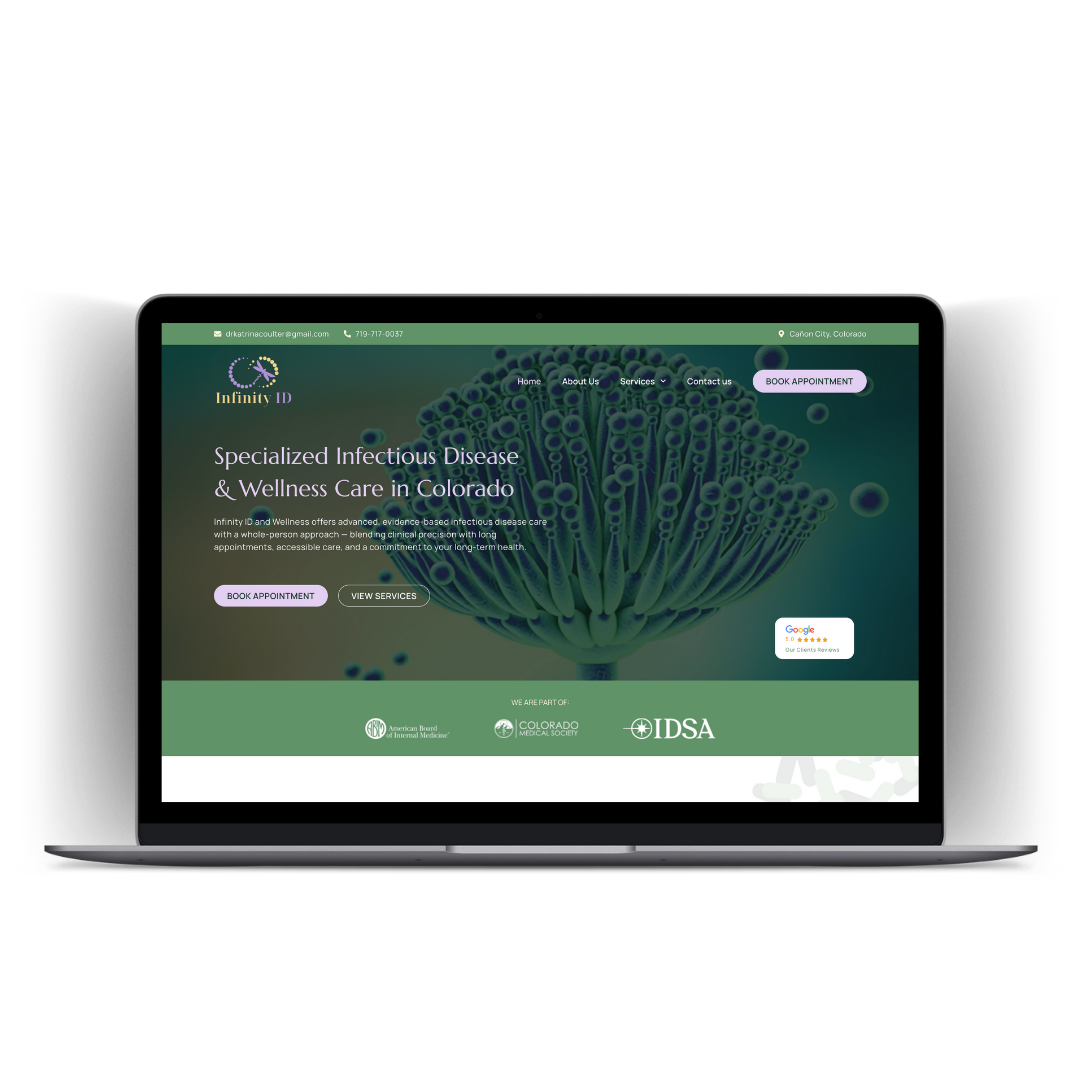

Behind every search,a real decision about care.
Healthcare pages can influence real decisions about care. That changes how we approach SEO.
Content needs to be clear without oversimplifying. Search-focused without distorting clinical information. Persuasive without making claims the practice cannot substantiate.
Provider credentials, authorship, clinical accuracy, sources, privacy, accessibility and the overall reputation of the website matter far more here than they do on a typical commercial website.
That is why we do not treat healthcare SEO as generic SEO with the word medical added to the keyword list. We build around the standards patients — and search engines — expect from healthcare information.
Google treats health information as a high-stakes YMYL category and identifies trust as the most important part of E-E-A-T.
Google’s guidance on helpful, trustworthy content ↗Local search is often the shortest path between a patient and your practice.
A prospective patient searching for care nearby may encounter your Google Business Profile before they ever reach your website. That makes local SEO an important part of the wider search strategy.
We look at the relationship between your website, practice locations and local presence — including the services associated with each location, consistent practice information, relevant location pages, Google Business Profile optimisation and the overall strength of your local search footprint.
For multi-location practices, this becomes even more important. Each location needs enough unique, useful information for patients and search engines to understand the difference between them — without creating dozens of nearly identical pages.

Medical clinic · Austin, TX
Open · Closes 5 pm
240 Willow Grove Lane, Austin
Primary care · Specialist consultations
Align your service pages, provider information and Business Profile around one clear local presence.
Give every location useful, specific information about its clinicians, services and visits. Connect those pages within one coherent practice website.
Patients are not discovering healthcare through Google alone anymore.
Patients are not discovering healthcare through Google alone anymore. Google search results increasingly include AI-generated answers. Patients also use tools such as ChatGPT and other AI assistants to research symptoms, treatments, specialists and providers.
That does not make traditional SEO obsolete. It makes the fundamentals even more important.
Clear information architecture. Strong provider and organisation signals. Well-structured answers. Useful original content. Accurate information. Internal relationships between services, conditions, locations and clinicians. Structured data where appropriate.
We build those foundations so your content is easier for both traditional search engines and newer AI-driven discovery systems to interpret.
Google’s guidance on SEO and AI features ↗Clear credentials, clinical interests and authorship help people understand who is responsible for care and information.
The goal is no longer simply to rank.It is to become easier to understand, trust and reference.
An ongoing strategy, shaped by your practice and what the search data tells us.
Talk through your priorities ↗We review your current visibility, website structure, priority services, locations, competitors, technical health and existing content.
We identify what is already working before changing anything.
We map the opportunities against the areas of your practice you actually want to grow.
That becomes a focused search roadmap rather than an endless SEO checklist.
We improve priority pages, technical foundations, internal linking, local visibility, content and search architecture.
New content is created where it adds genuine value — not simply to increase page count.
We monitor what people are finding, where visibility is improving and what happens after visitors arrive.
The strategy evolves with your practice, your market and changes in search.
Ranking for hundreds of keywords sounds impressive. It means very little if none of them contribute to the growth of your practice.
Our reporting focuses on the signals that help us understand whether search visibility is becoming more commercially useful: qualified organic traffic, non-branded discovery, important service and location visibility, Google Business Profile performance, enquiries, calls, booking actions and conversion behaviour.
Where appropriate, we connect those signals with your wider analytics so we can see which areas deserve more investment and which do not.
Non-branded searches · Service and location visibility
Are more of the right people finding your practice?Qualified visits · Useful content · Local interest
Are people reaching the information they need?Enquiries · Calls · Booking actions
Does that visibility lead to a meaningful next step?Not just where you appear.What happens next.
Built for healthcare practices that want sustainable visibility.
Rely less heavily on referrals or paid advertising.
Help patients understand complex services and areas of expertise.
Build visibility as you expand into new services or locations.
Create a more scalable search architecture.
Let digital visibility reflect the quality and credibility of your work.
One reason MedElite combines healthcare website design with search strategy is simple: the decisions that affect SEO often begin long before a page is published.
Navigation. Service structure. URL architecture. Provider pages. Locations. Internal links. Content hierarchy. Page speed. Calls to action.
When those decisions are considered during the website process, search becomes part of the foundation rather than something added afterwards.
Planning a new website?
Explore Healthcare Website Design →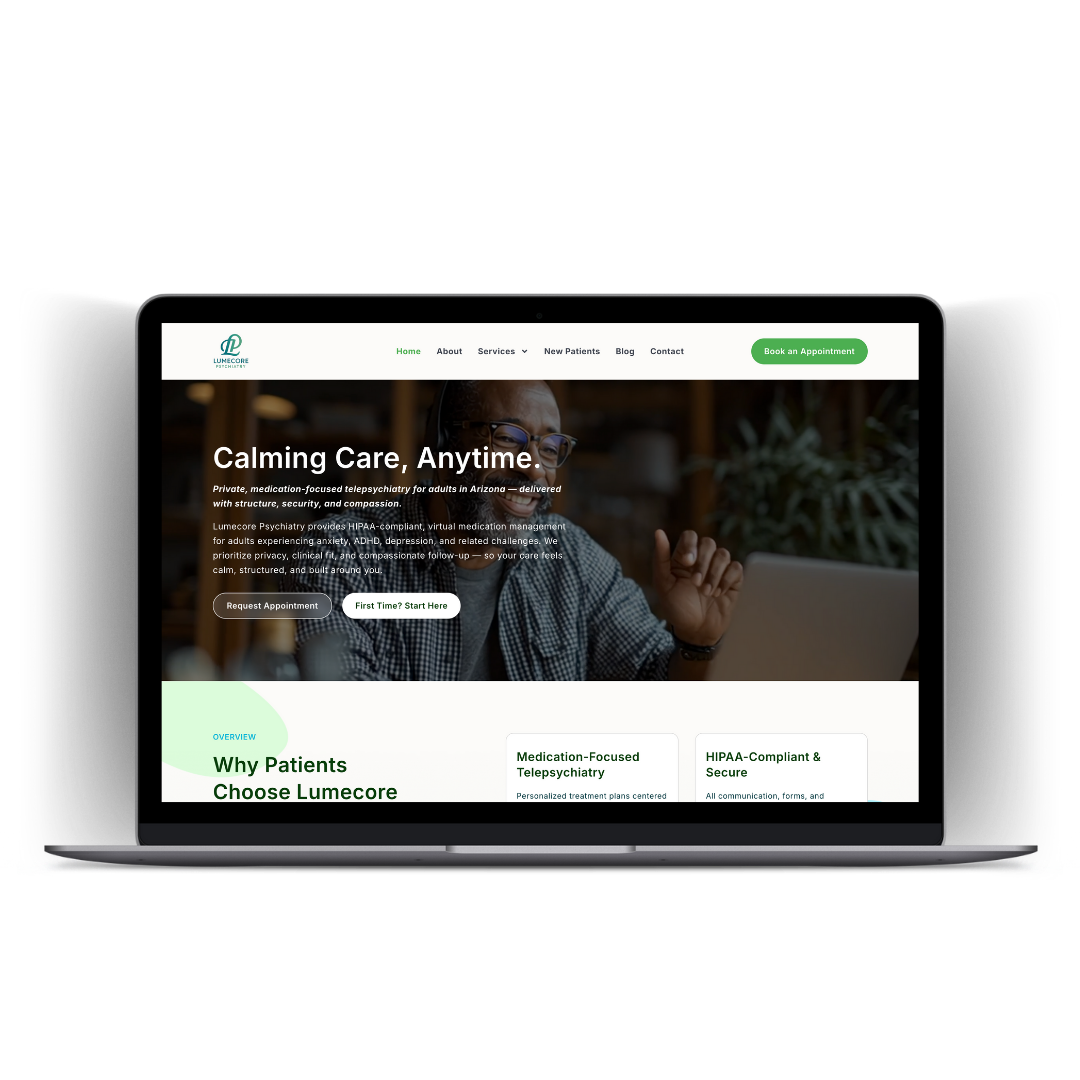
Healthcare SEO is the process of improving the visibility of a medical or healthcare practice across organic search results. It can include technical SEO, local search, website structure, service and condition content, provider information, Google Business Profile optimisation, internal linking and authority-building.
The objective is to help the right patients discover and understand your practice when they are actively searching for care.
Healthcare search involves higher expectations around accuracy, trust, expertise and privacy. Medical websites also have more complex search journeys involving providers, specialties, conditions, treatments, locations and referrals.
A healthcare SEO strategy needs to understand those relationships rather than applying a generic local-business SEO template.
There is no responsible universal timeline. Some technical or local improvements can create progress relatively quickly. Competitive service and treatment searches usually require sustained work across content, technical SEO and authority.
SEO is better viewed as a compounding growth channel than a short-term campaign.
Not necessarily. We first assess whether the current website can support the search strategy.
If the underlying structure, technology and user experience are strong enough, we can improve what already exists. If the website itself is creating significant limitations, we will explain those before recommending a rebuild.
No. Search rankings are controlled by search engines and change continuously. We do not believe responsible SEO agencies should guarantee a specific Google position.
What we can do is build a stronger search foundation, identify realistic opportunities and continually improve the factors we can control.
Yes. We can research, structure and draft patient-friendly healthcare content as part of the search strategy.
Where content contains clinical claims or information specific to your medical approach, your practice should review and approve it before publication.
Yes. For location-based healthcare providers, website SEO and local visibility are closely connected. Google Business Profile, location information and the website itself are considered together.
Yes — as part of the wider search strategy. We focus on making your organisation, providers, services and expertise easier for search and AI systems to understand through clear content, structured information, strong site architecture and credible signals.
We do not treat “AI SEO” as a separate shortcut or promise guaranteed AI citations.
If your practice offers excellent care but your visibility does not reflect it, we can help identify where the gap is.
We will look at how patients currently find you, where important opportunities are being missed and what would make the greatest difference next.
Tell us about your practice, your priority services and where you want to grow.