Do you treat what I have?
Help patients recognise their concern in your conditions and services.
DERMATOLOGY WEBSITE DESIGN
Dermatology website design built around how patients actually look for care.
A diagnosis. A symptom. A skin check. A cosmetic concern. Help every patient understand where they belong, without making the experience feel complicated.

We bring clinical expertise, clear patient pathways and search visibility into one considered digital experience.
↓ONE PRACTICE. DIFFERENT REASONS FOR VISITING.
Medical and cosmetic patients have different questions. Help each find the right care, with one clear identity for your practice.
REASSURANCE + EXPERTISE
Someone researching acne, eczema, psoriasis or a changing skin lesion needs a clear introduction to the condition, the practice’s experience and how to access care.
A clear route to the appropriate consultation →
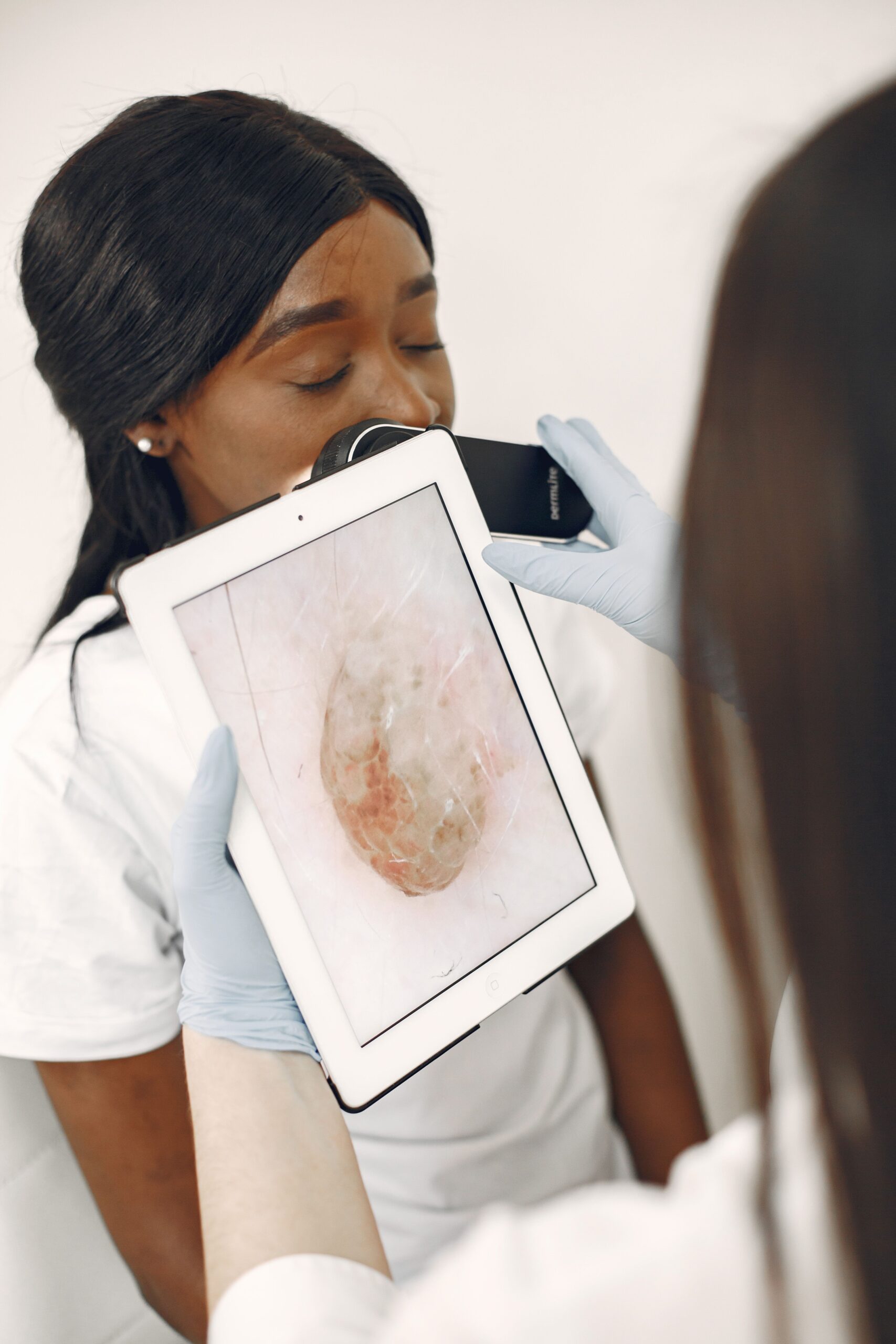
Medical dermatology patients are looking for reassurance and expertise. Make the condition, provider and appointment path easy to understand.
THE NEXT DECISION
A long Services menu lists what you do. Clear groups and simple labels help patients know where to start.
Help patients recognise their concern in your conditions and services.
Bring the clinician’s experience and approach into the decision.
Explain the appropriate entry point without asking patients to self-diagnose.
Connect each clinic with the care and providers available there.
Make the right appointment route visible and straightforward.
Set expectations for the enquiry, appointment and preparation.
Good dermatology website design removes unnecessary uncertainty between the search and the appointment.
BUILT AROUND PATIENT INTENT
Patients do not always search for “dermatology.” Priority condition pages can connect the question they are asking with your relevant care.
No example matches. Try another concern.
A USEFUL CONDITION PAGE
Introduce your approach to acne care, the clinicians with relevant experience and the appropriate consultation route.
Illustrative website structure, not clinical advice.
Someone reading about rosacea may need related treatment options. Someone researching a procedure may want to know which dermatologist performs it. We design those relationships deliberately.
Plan pages around the care you provide. Give key conditions, treatments and locations useful content. Link them so patients can find their next step.
THE PEOPLE BEHIND THE CARE
Clinical expertise is one of the strongest trust signals on the site. Give it more room than a small headshot and a three-line biography.
A provider page can help patients understand the person, the care and the next step, without becoming a CV.
Make your expertise visible ↗Qualifications, board certification where applicable, training, affiliations and relevant publications.
Clinical interests, conditions and procedures treated, experience and approach to patient care.
Locations, availability of relevant care and a clear route to an appointment.
A STRUCTURE FOR THE CARE YOU PROVIDE
Medical, procedural and cosmetic care can have their own clear pathways without becoming disconnected brands.
Medical dermatology websites can become information-heavy. The answer is not necessarily less information. It is better hierarchy.
Patients should not need to understand the clinic’s internal terminology before they can understand the practice.
For skin checks, biopsies, surgical dermatology, Mohs surgery and related services, the website may need to support a different level of patient education.
For referral-driven services, we can also consider the referring-provider journey separately from the patient journey.
The cosmetic experience should feel connected to the medical brand, while giving aesthetic patients a distinct pathway.
An elevated experience can preserve the clinical credibility that differentiates a dermatologist-led practice.
Pediatric dermatology, laser care and other specialist services need an appropriate place in the architecture, based on the practice’s actual scope.
Help patients or parents understand which clinician provides the care, where it is available and how to begin.
LOCAL SEARCH + ACCESS
Dermatology is also a local decision. Location pages, Google Business Profiles, provider information and the website should tell a consistent story.
Useful location information connects addresses, contact details, available services and clinicians. It avoids near-identical pages with a different city inserted into the heading.
Explore healthcare SEO ↗YOUR LOCATION PAGE / THE USEFUL DETAILS
WHEREAddress, directions and contact details
WHODermatologists available at this clinic
CAREServices and procedures offered here
Help patients choose the relevant provider, location or appointment type before handing over to your supported booking platform.
An example of how your existing workflow can appear online.
WHAT WE CAN BUILD
A single specialist and a multi-location dermatology group need different structures. The scope follows the practice, not a fixed list of pages.
Patient-friendly information around priority areas of care. Explain the condition, your approach, relevant providers, related treatments and how to make an appointment.
Dedicated pages for strategically important services, with useful context and appropriate consultation guidance.
Credentials, expertise, clinical interests, locations and clear appointment paths.
Distinct routes for different patient needs, held together by one coherent practice identity.
Clear information for screening, surgery and referral-driven care where relevant.
Considered galleries where appropriate, approved and legally suitable, connected to relevant treatments and providers.
Useful pages for individual clinics, reflecting the providers, services and access options available there.
Connections to your existing booking or practice-management workflow where the platform supports them. This may include online booking, appointment requests, calls, cosmetic consultations and existing-patient portals.
Forms, FAQs, preparation guidance, portal access and practical information that supports the next step.
A deliberate structure connecting conditions, treatments, providers and locations, with technical SEO foundations planned from the beginning.
DESIGN WITH THE RIGHT BALANCE
Dermatology is visual by nature. Your website can communicate expertise before someone reads every word, without relying on generic images of perfect skin.
Dense text. Dated interfaces. Little personality or sense of the people behind the care.
Beautiful imagery with little substance. Weak provider credibility. Medical care hidden behind lifestyle messaging.
Use photos, type and colour that reflect your practice. Help patients see an experienced team and find clear answers about their care.
FOR GROWING DERMATOLOGY PRACTICES
New dermatologists, cosmetic services, clinics or technology can change the relationships the website needs to explain.
Connect each dermatologist with their clinical focus, relevant services, locations and appointment options. Help patients find the right person without comparing disconnected biographies.
Your practice may outgrow its website as services change and content builds up. A redesign should organise that information and help patients find the right care.
OUR APPROACH
Providers, conditions, procedures, locations, patient groups, referral patterns and growth priorities.
How medical, procedural and cosmetic patients enter and move through the website.
Conditions, treatments, providers, locations and booking organised into a coherent system.
A visual direction that reflects your positioning and makes information easy to use.
Responsive development, technical SEO foundations, booking pathways and launch preparation.
Search demand helps inform priority conditions, treatment content, medical and cosmetic pathways, locations and provider connections. That planning belongs at the beginning, not in a checklist just before launch.
WHY MEDELITE
We focus on healthcare. We help practices explain their services, show their team’s expertise and make booking easier. Search visibility and patient privacy guide the work.
Clinical information should feel clear, credible and human online.
Senior attention, from strategy to launch.Tell us about your practice ↗That depends on the scope of the practice, but a strong dermatology website will usually need clear service or condition information, dermatologist profiles, location and appointment information, trust signals and an easy route to the appropriate next step.
No. The goal is not to manufacture hundreds of pages. Priority conditions that matter to the practice and have genuine patient or search demand may benefit from dedicated content. Related or lower-priority conditions can often be grouped logically.
Usually they should at least have distinct pathways. The patients, questions and decision process can be different even when the same practice provides both. We can differentiate those journeys while keeping the overall brand cohesive.
Yes, where your booking or practice-management platform provides an appropriate integration, widget or booking link. We plan the website around the workflow the practice already uses.
Yes. The architecture can connect individual locations with their providers, services and relevant appointment paths instead of simply cloning the same location page repeatedly.
Yes, when they are appropriate for the service and the practice has suitable approved imagery. The practice remains responsible for consent and for ensuring clinical imagery complies with applicable laws, professional rules and advertising requirements.
Yes. SEO can be incorporated into the website architecture from the beginning and continued after launch through MedElite’s Search + Growth services.
We do not make a blanket compliance promise based on the visual website alone. Where a U.S. practice handles protected health information online, forms, integrations, hosting, vendors and data flows need to be considered as part of the appropriate technical and legal setup. We can design around privacy-conscious workflows and supported systems, while the practice remains responsible for its compliance requirements.
EASIER TO FIND. EASIER TO TRUST.
Your dermatologists already have the credentials. Your practice already delivers the care. Your website should make both clearer before the first appointment.
Before starting a project, compare website project costs and consider what helps a healthcare website convert.